Mathematics is often presented in modern textbooks as a finished monument of static symbols, austere formulas, and rigid procedures. But every mathematical breakthrough was once an unsolved puzzle, born from the passionate curiosity, tireless perseverance, and daring imagination of human thinkers across thousands of years.
1. Demystifying Mathematics Through Historical Context
When students encounter a formula like \(e^{i\pi} + 1 = 0\) or the Pythagorean theorem without historical context, it can feel arbitrary and intimidating. Learning the story of who discovered an idea—and what problem they were trying to solve—transforms abstract notation into a living conversation across generations:
- Euclid of Alexandria did not write the Elements to torment students with definitions; he organized geometric reasoning into the world's first rigorous deductive system, proving that complex spatial truths can be established from a handful of self-evident axioms.
- Aryabhata and Bhaskara II developed zero, decimal place values, and cyclical algebraic methods (Chakravala) to track astronomical planetary movements and calendar cycles without modern computing tools.
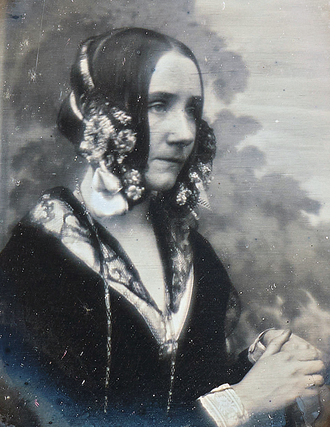
- Ada Lovelace recognized that Charles Babbage’s mechanical Analytical Engine was not just a calculator for numbers, but a symbolic processor capable of manipulating musical notes, text, and scientific patterns—authoring the world's first computer algorithm in 1843.
- Srinivasa Ramanujan demonstrated that deep mathematical intuition can flourish through independent self-study, discovering thousands of revolutionary formulas for infinite series and modular forms in isolation in Kumbakonam.
2. The Four Great Epochs of Mathematical Thought
Ancient Axioms (c. 300 BCE – 600 CE)
Pioneered deductive proof, compass-and-straightedge constructions, trigonometry of spheres, and foundational decimal notation. Explored by Euclid and Aryabhata.
Medieval & Renaissance Algebra
Bridged arithmetic into systemic equation-solving, astronomical kinematics, and experimental observation. Advanced by Bhaskara II and Galileo Galilei.
The Age of Analysis (1700 – 1850)
Unified algebra, geometry, and physics through infinitesimal calculus, complex numbers, and number theory. Led by Leonhard Euler and Carl Friedrich Gauss.
The Modern & Digital Era (1850 – Present)
Exploded into symbolic computing, non-Euclidean geometries, orbital spaceflight trajectories, combinatorics, and topology. Exemplified by Lovelace, Johnson, Einstein, and Erdős.
3. Connecting Mathematical History to Interactive Labs
On Ganitha Loka, the history of mathematics is not passive trivia; it directly animates our interactive challenges. When you construct perpendicular bisectors in Euclid Quest, you recreate Proposition 10 of Euclid’s Book I. When you factor large composite numbers in Factor Fortress, you walk the intellectual path explored by Carl Friedrich Gauss and Srinivasa Ramanujan.