Begin with equal groups
If multiplication still feels like a rule to memorise, start with tiles you can count. Then practise using the four operations and deciding which operation comes next in an expression.

Build understanding with interactive maths games, visual models and step-by-step explanations. Start with counting and fractions, or explore algebra, probability and calculus. Choose a topic you want to understand, then test the idea for yourself.
Practise arithmetic, fractions, decimals, geometry, patterns and data.
Good place to begin: Quick Arithmetic Challenge →
Explore Foundation Games →Experiment with algebra, coordinate geometry, probability, trigonometry, vectors and calculus.
Good place to begin: Coordinate Line Challenge →
Explore Advanced Games →Quick Arithmetic Challenge — Practise addition, subtraction, multiplication and division through fast mental maths challenges.
Choose by what you already understand. Each lesson lists the skills you need before you begin, so you can move back to an earlier idea whenever you need it.
If multiplication still feels like a rule to memorise, start with tiles you can count. Then practise using the four operations and deciding which operation comes next in an expression.
If whole-number arithmetic is comfortable, explore how the same amount can have different representations. Compare equal parts before adding fractions, then connect fractions with decimal place values.
If you can work with negative numbers and simple expressions, investigate equality, lines and rates of change. Follow the worked examples before tackling a new kind of problem.
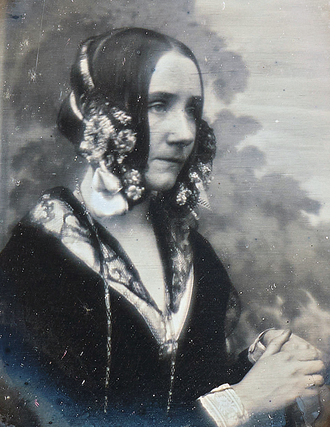
Ada Lovelace's notes on the Analytical Engine describe a procedure for calculating Bernoulli numbers. Explore how precise instructions turn a calculation into an algorithm.
Explore how mathematical concepts come to life through visual simulations.
Compare fractions visually using slice proportions.
Play Game →Place decimals precisely on an interactive scale.
Play Game →Keep both sides of an algebraic equation equal.
Play Game →The activities focus on particular ideas, with examples you can follow and questions you can explain. Use them to practise a familiar topic or investigate something new alongside your usual lessons.
Learn why mental arithmetic strategies work, distinguish factors from multiples and describe a sequence with a rule. Check a pattern against every term rather than guessing from its appearance.
See why one half and two quarters represent the same amount. Use common-sized parts to add fractions, and locate tenths and hundredths on a number line instead of comparing digits as whole numbers.
Separate the distance around a boundary from the surface it encloses. Work with lengths, square units and angles, then explore how geometric constructions can be justified through a proof.
Understand an equation as two expressions with equal values. Apply the same operation to both sides, check a solution by substitution, and investigate how slope and intercept determine a straight line.
Compare mean, median, mode and range, and see how an outlier changes a summary. Count possible outcomes and distinguish a theoretical chance from the results of a small random sample.
Connect an angle with horizontal and vertical motion in a simplified projectile model. Investigate a curve's tangent and learn how a derivative describes a rate of change at a point.
Use the explanation and the activity together. A useful goal is to explain why an answer works, as well as find the answer.
Read the concept briefing and follow a worked example. The step-by-step lesson below each game explains the rules, their meaning and common mistakes.
Change one value or move one part of the visual model. Predict what will happen, then compare the result with your prediction.
Attempt the practice question before opening its answer. Use the explanation to locate a mistaken step, then try the game challenge.
Explain the method in your own words and try a different example. When the idea feels clear, follow the next-activity link to a related topic.
Choose one idea rather than trying to finish a whole category. Keep paper nearby for working, take time to read the lesson between attempts, and check your reasoning before focusing on speed. XP and badges record activity; your explanation shows what you understand.
Begin with the listed prerequisites and ask the learner to predict a result before moving a control. Questions such as “What stayed the same?” and “Why did you choose that operation?” can reveal a misconception. Use the activity alongside classroom teaching, discussion and written practice.
Ganitha Loka began with one parent trying to make mathematics clearer and more enjoyable for one young learner. It is now shared freely with curious learners everywhere.
If a learner can see how an idea works, mathematics becomes something to explore—not something to fear.